
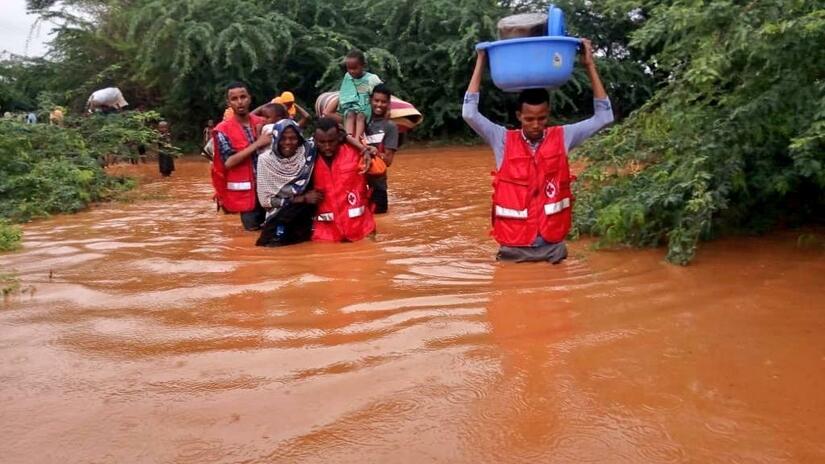
At least 23 people have died after sudden flash floods swept through Nairobi, Kenya’s capital, authorities confirmed on Saturday. Rescue operations continue as emergency teams work to help residents trapped by rising waters.
The torrential rains that hit the city late Friday night turned streets into raging rivers and inundated thousands of homes and businesses. AFP reporters on the scene observed severe damage across Nairobi, from informal settlements to upscale districts like Parklands.
Frederick Wasonga, a trader in the city center, said the flooding began when riverbanks gave way. Vehicles were swept away, and shops were destroyed, causing heavy losses for local business owners. Derrick Juma, a local panel beater, said two neighbors lost their lives—one from electrocution and another from exposure while seeking shelter.
Police confirmed that 29 people were rescued overnight and emphasized that officers remain on full alert, responding to distress calls as more rainfall was recorded on Saturday.
The Kenya Red Cross described the scale of the destruction as severe, noting that many parts of the city and neighbouring counties were affected. President William Ruto deployed an emergency response team to coordinate relief efforts and highlighted the urgent need for long-term solutions to Nairobi’s persistent flooding problem.
Meanwhile, criticism has mounted against Governor Johnson Sakaja, with activists pointing to inadequate drainage systems and poor infrastructure management as key factors worsening the floods.
The extreme weather has also disrupted flights, with Kenya Airways diverting several flights from Nairobi to Mombasa due to heavy rains. Relief agencies report that hundreds of households in surrounding counties have been affected, and large areas of farmland have been destroyed.
Experts say the region has experienced increasingly frequent extreme weather events over the last 20 years, contributing to cycles of drought and flooding that threaten communities across East Africa.
AFP
About The Author