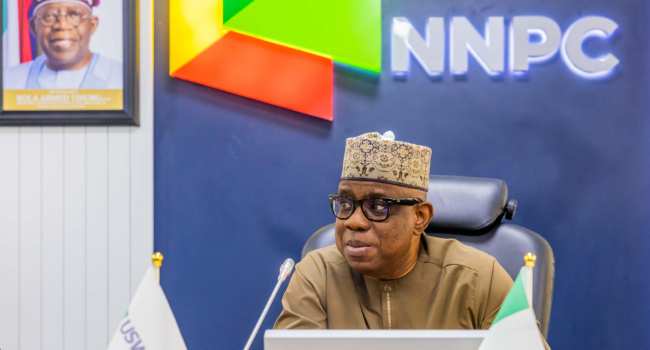
The Group Chief Executive Officer of Nigerian National Petroleum Company Limited, Bayo Ojulari, has stated that resolving the long-running dispute over Oil Prospecting Licence 245 (OPL 245) could unlock major development opportunities for Nigeria’s oil sector.
In a statement released on Saturday, Ojulari explained that the settlement clears the path for the development of the Zabazaba–Etan deepwater oil project, which could significantly raise Nigeria’s crude oil output.
According to him, advancing the project has the potential to increase Nigeria’s production by about 150,000 barrels per day (bpd) once operations begin.
Earlier on March 5, the Nigerian Presidency announced that the Federal Government had reached a settlement agreement with Eni and Nigerian Agip Exploration Limited. The deal effectively resolved the long-standing dispute surrounding OPL 245, paving the way for development activities to proceed.
Ojulari described the resolution as a significant milestone for both the country and the national oil company, adding that it demonstrates Nigeria’s commitment to responsibly managing its energy resources.
He noted that the settlement allows progress on one of Nigeria’s most strategic offshore assets and could contribute to improved energy security and economic growth for the country.
Ojulari also acknowledged the role of Bola Ahmed Tinubu in facilitating the resolution, stating that the President entrusted NNPC with supporting efforts to conclude the dispute involving the Nigerian government and international partners.
President Tinubu had earlier said the agreement signals to global investors that Nigeria is prepared to address long-standing issues transparently and create a more stable environment for energy investments.
The agreement was reached during a meeting at the Presidential Villa attended by senior executives from Eni and Nigerian Agip Exploration Limited, alongside government officials including the President’s Special Adviser on Energy.
According to the Presidency, the settlement ends a dispute that lasted more than 15 years, bringing clarity to one of Nigeria’s most commercially valuable deepwater oil blocks and opening the door for future development.
About The Author