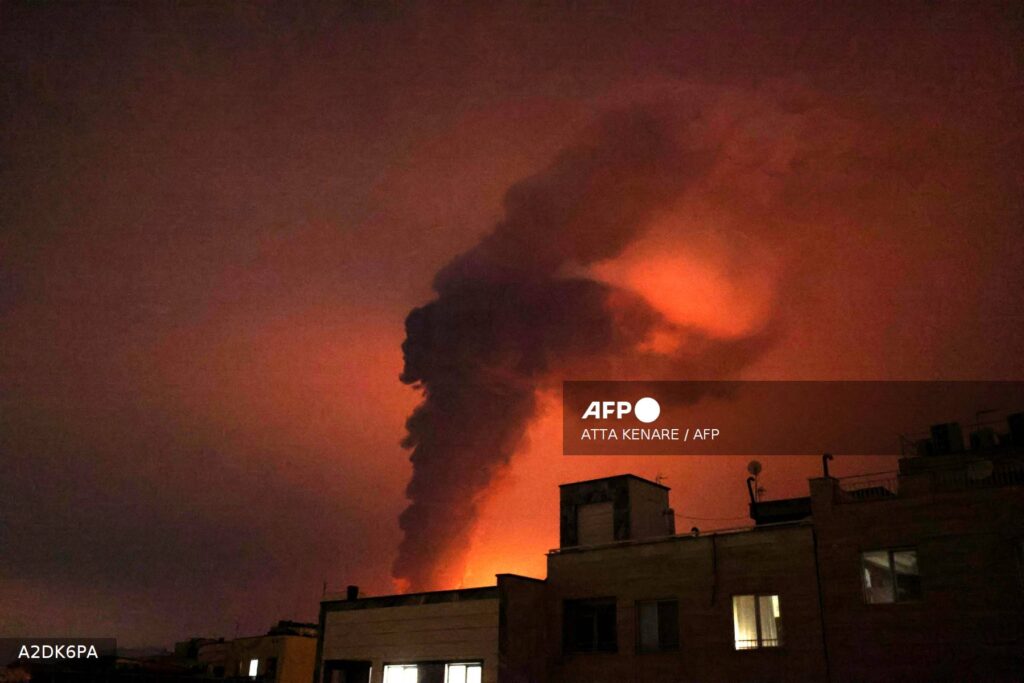
Explosions erupt following strikes at Shahran Oil Refinery in Tehran on March 7, 2026. The United States and Israel launched strikes against Iran on February 28, sparking swift retaliation by the Islamic republic which responded with missile attacks across the region. The war has dragged in global powers, upended the world's energy and transport sectors, and brought chaos to even usually peaceful areas of the volatile region. (Photo by ATTA KENARE / AFP)
Overnight strikes by the United States and Israel targeted five oil facilities in and around Tehran, Iran, resulting in the deaths of four people, according to state media reports on Sunday.
Keramat Veyskarami, CEO of the National Iranian Oil Products Distribution Company, confirmed that four oil depots and a petroleum transport center in Tehran and Alborz were hit by what he described as “enemy aircraft.” Among the victims were two oil tanker drivers, while others sustained injuries.
The attacks caused significant fires at the facilities, though Veyskarami said that the flames were eventually brought under control. Smoke from the blazes hung over Tehran overnight, with residents reporting lingering odors of burning across the city the next morning.
Despite the attacks, Veyskarami reassured the public that Iran has sufficient gasoline reserves to meet demand.
These strikes follow the February 28 US-Israel offensive, which killed Iran’s Supreme Leader Ayatollah Ali Khamenei and triggered a broader conflict in the Middle East. Iran has since retaliated with drone and missile attacks targeting US and Israeli interests in the region.
About The Author