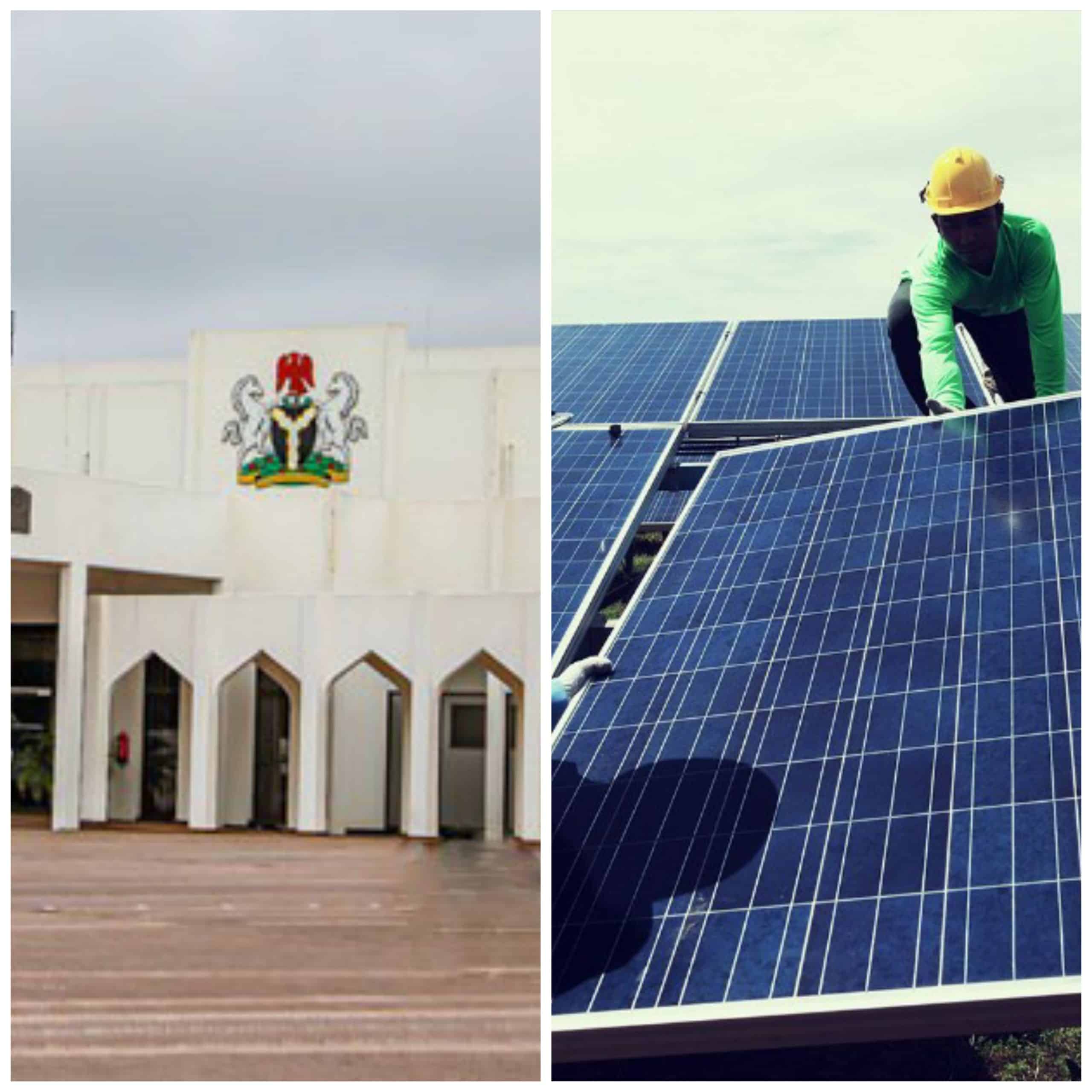
The recent decision to install solar power at Aso Rock, Nigeria’s presidential villa, has sparked significant debate across the country. While renewable energy is often viewed as a step toward sustainability, the timing and symbolism of this move raise important questions about the government’s priorities in a nation already struggling with a long-standing electricity crisis.
For decades, Nigerians have faced what can only be described as inconsistent power supply. Businesses depend heavily on generators, households spend a lot on fuel, and entire communities go days without stable electricity. This issue is not new; it has persisted through many administrations, various reforms, and billions of naira in investments that promised to transform the power sector but rarely delivered lasting results.
When Nigerians voted for President Bola Tinubu in 2023, many hoped that strong leadership would finally tackle critical infrastructure challenges, especially electricity. Reliable power is essential for economic development, industrial growth, and improved quality of life. For millions, this hope was linked to the belief that this administration would take bold steps to fix the national grid, increase generation capacity, and stabilize distribution across the country.
However, the installation of solar panels at Aso Rock sends a mixed message. Instead of showing confidence in the national power system and leading a nationwide reform effort, the presidency seems to be isolating itself from the very issues ordinary Nigerians face daily. Critics argue that this move suggests a government preparing its own alternative power supply while the rest of the nation remains in the dark.
The concern is not with solar energy itself. Renewable energy is an important part of modern energy systems globally. But when the government chooses to bypass the national grid instead of fixing it, the action risks appearing disconnected from the realities facing citizens and businesses across Nigeria.
Small and medium-sized enterprises—the backbone of Nigeria’s economy—are struggling under unstable electricity. Many spend more on diesel and petrol than on wages or expansion. This leads to rising unemployment, higher prices for goods and services, and declining productivity. For these Nigerians, solar panels at the presidential villa do little to address the systemic failures of the power sector.
What Nigerians expected was a clear strategy: investment in generation, modernization of transmission infrastructure, accountability in distribution companies, and policies that attract credible investors into the sector. Instead, the current development may deepen public frustration, reinforcing the view that leaders are protecting themselves from problems they were elected to solve.
The reality is straightforward: if Aso Rock cannot rely on the national grid, what hope is left for the average Nigerian?
The installation of solar power at the presidential villa may solve the electricity issue within its walls, but it does nothing for the millions of citizens who continue to deal with unreliable power supply. If anything, it raises an uncomfortable question—whether the government is focusing on fixing the nation’s power system or merely finding ways to work around its shortcomings.
For many Nigerians who believed that President Bola Tinubu would be the leader to finally resolve the electricity crisis, this moment may lead to a period of reflection. They expected transformation, not an adjustment to failure.
Nigeria does not need symbolic solutions. It needs real reform that ensures consistent, affordable electricity for every home, business, and community. Until that happens, installing solar panels at the seat of power risks becoming a powerful metaphor for a nation where leaders have power while the people remain in darkness.
About The Author