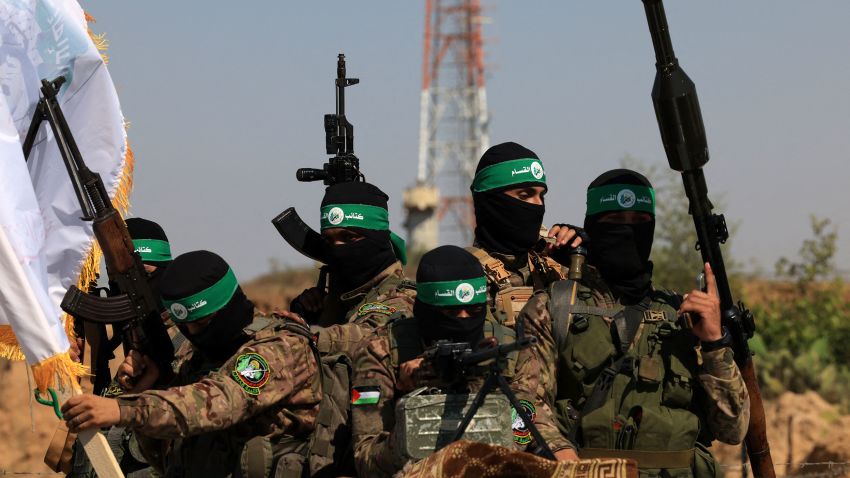
The Hamas movement on Saturday urged Iran not to target neighbouring countries while reaffirming Tehran’s right to defend itself against attacks from Israel and the United States.
In a statement, Hamas said that while it supports Iran’s right to respond to what it described as aggression using all available means under international law, it also called on Iranian authorities to avoid expanding the conflict by striking neighbouring nations.
The appeal came as the Middle East conflict continues to widen, with new security incidents reported across several countries in the region.
In Baghdad, a drone struck the United States Embassy Baghdad on Saturday, according to Iraqi security officials. An AFP journalist at the scene reported seeing smoke rising from the diplomatic complex, while another security source confirmed that the mission had been targeted.
The incident followed explosions that rocked the Iraqi capital earlier in the day after two strikes hit positions linked to the Iran-backed militia group Kataeb Hezbollah. Security sources said two members of the group, including a key figure, were killed in the attack, although the identity of those responsible for the strikes was not immediately confirmed.
Meanwhile, Donald Trump said Iran had been “totally defeated” in the ongoing US-Israeli military campaign, despite Iranian leaders vowing to continue their resistance. Writing on his Truth Social platform, Trump criticised media coverage of the conflict and claimed the United States military had achieved major success against Iranian forces.
Trump also said the US military had carried out heavy bombing of targets on Kharg Island, which handles most of Iran’s crude exports. However, he added that the United States had not yet destroyed the island’s oil infrastructure but warned that the situation could change if Iran attempted to disrupt shipping in the Strait of Hormuz.
Iran’s military responded by threatening to destroy US-linked energy facilities across the region if its oil infrastructure were attacked.
The conflict has also raised concerns about maritime security, with Trump stating that the United States Navy would soon begin escorting oil tankers through the Strait of Hormuz in order to maintain global energy supplies and stabilise oil markets.
Elsewhere in the Gulf, authorities in Doha began evacuating several sensitive locations as Iran continued retaliatory air operations across parts of the region. Residents in the central Musheireb district reportedly received emergency alerts instructing them to temporarily evacuate the area as a precautionary measure.
Iran also launched a fresh wave of missiles toward Israel early Saturday. The Israel Defense Forces said it detected the incoming missiles and activated air defence systems to intercept them, while air raid sirens sounded across several Israeli cities. Emergency services later reported no casualties from the attack.
In Lebanon, the health ministry said an Israeli airstrike on a healthcare centre in the country’s south killed 12 medical personnel. The ministry described it as the second strike against the health sector within a few hours. Another attack earlier reportedly killed two paramedics associated with the groups Hezbollah and Amal Movement.
Lebanese authorities said Israeli strikes have killed at least 773 people in the country since early March as fighting between Israel and Hezbollah intensified.
Hezbollah leader Naim Qassem said the group was prepared for a prolonged confrontation with Israel after the country threatened to increase attacks on Lebanese infrastructure.
The regional war has also begun affecting the global economy. Oil prices have surged above $100 per barrel amid fears that the conflict could disrupt supply routes through the Persian Gulf. Brent crude, the global benchmark, closed at about $103.14 per barrel after rising more than 40 percent since the conflict began.
The United States has also stepped up pressure on Iran’s leadership. The United States Department of State announced a reward of up to $10 million for information on Iran’s new supreme leader Mojtaba Khamenei and other senior Iranian officials.
The widening conflict has even begun affecting international sports, with Formula One reportedly considering cancelling or rescheduling races scheduled in Bahrain and Saudi Arabia due to the escalating security situation.
According to the Israeli military, Israel has carried out about 7,600 strikes inside Iran and more than 1,100 in Lebanon since the joint military operation with the United States began.
AFP
About The Author