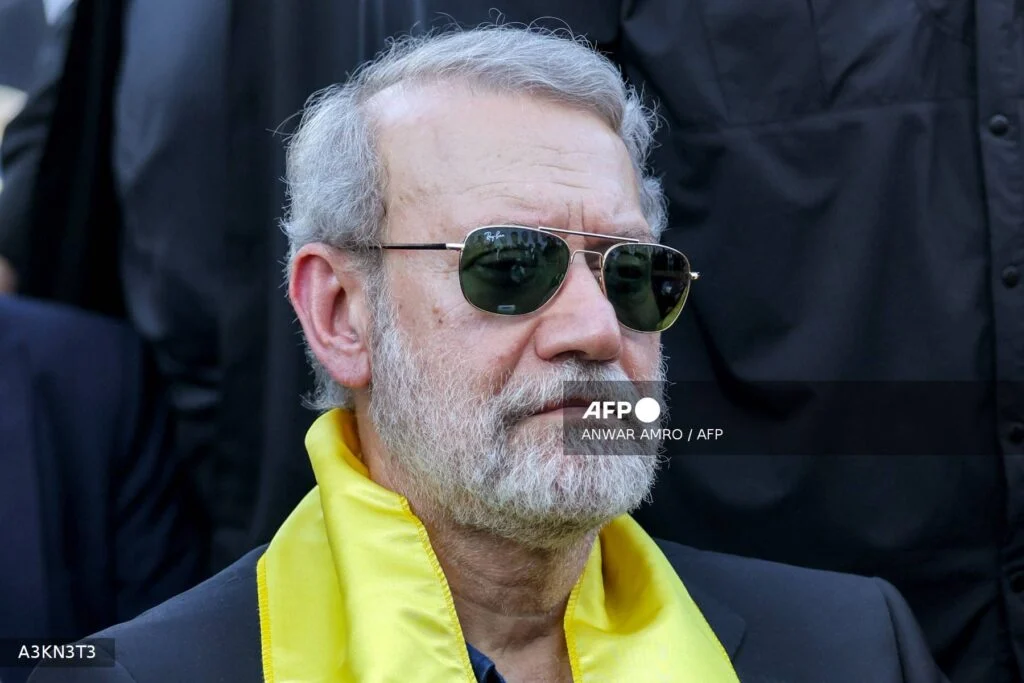
Iran's security chief Ali Larijani attends a ceremony by the Lebanese Shiite movement Hezbollah marking the first anniversary of Israel's assassination of their longtime leader Hassan Nasrallah, in Beirut's southern suburbs on September 27, 2025. (Photo by Anwar AMRO / AFP)
Iran has announced plans to hold a state funeral on Wednesday for its top security figure, Ali Larijani, following his death in an Israeli airstrike, as tensions across the Middle East continue to escalate.
Authorities in Tehran confirmed that Larijani, along with Gholamreza Soleimani, head of the Basij paramilitary force, will be buried after ceremonies scheduled to begin at 10:30 GMT in the capital.
The killings mark a significant escalation in the ongoing conflict, which intensified after coordinated attacks by Israel and the United States on February 28 reportedly led to the death of Iran’s Supreme Leader, Ayatollah Ali Khamenei.
In response, Iran has launched a series of missile and drone strikes targeting Israel and strategic locations across the region. One such attack reportedly killed two people near Tel Aviv, while several projectiles aimed at Gulf countries and US-linked facilities were intercepted.
The conflict has also spread to Lebanon, where Israeli forces carried out fresh airstrikes in Beirut, leaving casualties and sending plumes of smoke across parts of the city.
Iranian military officials have vowed strong retaliation, describing Larijani’s death as a major loss that will trigger further action. The country’s leadership has also warned that the global impact of the conflict is only beginning, especially as tensions around the Strait of Hormuz threaten international oil supply.
The United States has intensified its military involvement, deploying heavy bunker-busting bombs against Iranian missile installations near coastal areas, citing threats to global shipping routes.
Meanwhile, former US President Donald Trump criticised allies for not supporting efforts to secure oil tankers in the region, insisting that America could act independently if necessary.
Regional reactions continue to pour in, with Turkey condemning Israel’s targeted killings as unlawful, while Israel maintains it will pursue Iran’s leadership figures as part of its ongoing military objectives.
As the conflict deepens, fears are growing over its economic and humanitarian consequences, particularly with rising oil prices and the risk of further regional destabilisation.
AFP
About The Author