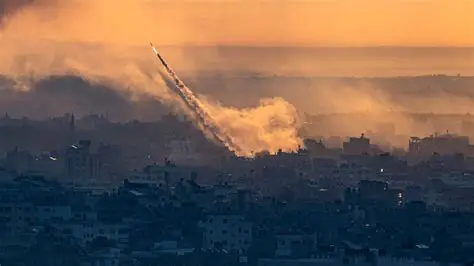
Iran fired a new wave of missiles into Israel on Tuesday, striking key areas in Tel Aviv and causing damage to buildings as well as injuries to civilians. The latest attack comes amid growing uncertainty over whether diplomatic talks can bring an end to the ongoing three-week conflict in the Middle East.
Reports from the scene showed significant destruction in Israel’s commercial hub, with debris scattered across streets and parts of buildings severely damaged. Emergency responders quickly moved in to assist victims, with at least four people reported injured across multiple locations.
Tel Aviv’s mayor, Ron Huldai, confirmed that one of the impacted sites suffered a direct hit, leaving a residential building in an upscale neighbourhood badly damaged. Authorities suspect the strike may have involved a cluster munition missile carrying multiple warheads, increasing the scale of destruction.
While the attacks intensified, conflicting narratives emerged over possible diplomatic engagement between Iran and the United States. President Donald Trump claimed that both sides had engaged in “productive” discussions aimed at resolving hostilities and said he had temporarily halted planned strikes on Iranian energy facilities to allow talks to continue.
However, Iranian officials strongly denied any negotiations were taking place. Parliamentary Speaker Mohammad Bagher Ghalibaf dismissed the claims, accusing Washington of attempting to influence global oil markets through misinformation. Similarly, Iran’s foreign ministry reiterated that no formal talks had been agreed upon, despite messages reportedly passed through intermediary nations.
Amid the confusion, reports indicated that U.S. envoys, including Steve Witkoff and Jared Kushner, could potentially meet Iranian representatives in Pakistan, although the White House has yet to confirm any scheduled discussions. Vice President JD Vance was also mentioned as a possible participant.
Meanwhile, Israeli Prime Minister Benjamin Netanyahu maintained that military operations would continue despite diplomatic signals, stressing Israel’s commitment to defending its territory. Israeli forces also sustained airstrikes in Lebanon, targeting positions linked to Hezbollah, further widening the scope of the conflict.
The war has already resulted in heavy casualties and displacement across the region. Thousands have reportedly been killed in Iran, while Israeli operations in Lebanon have left over a million people displaced.
The ongoing crisis continues to shake global energy markets, with oil prices experiencing sharp fluctuations. Although prices briefly dropped following Trump’s comments about possible talks, fears of prolonged conflict—especially involving the Strait of Hormuz, a critical global oil route—remain high.
As military actions intensify and diplomatic signals remain unclear, the situation in the Middle East continues to evolve, leaving the international community uncertain about whether a resolution is within reach or further escalation lies ahead.
About The Author