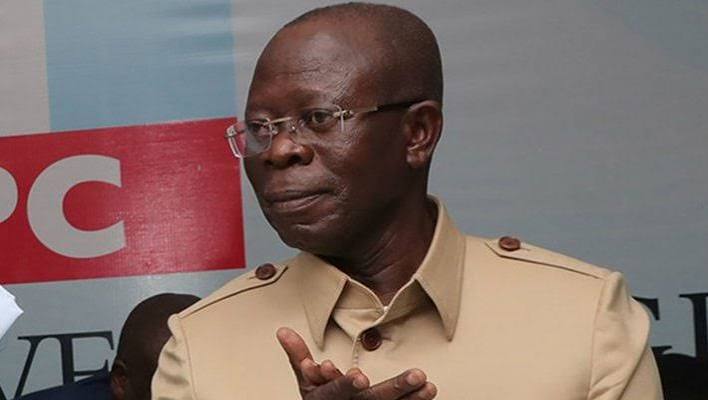
Senator Adams Oshiomhole
Fresh revelations have emerged from former National Chairman of the All Progressives Congress (APC), Adams Oshiomhole, as he opened up on the circumstances that led to his removal from office, claiming he was effectively “sacked through Zoom” during a controversial period in the party’s history.
Speaking during an interview on AIT, the Edo North Senator reflected on his time as APC chairman and the role he played in strengthening the ruling party ahead of and after the 2019 general elections. According to Oshiomhole, his leadership, alongside members of the National Working Committee (NWC), helped stabilize the party and resolve key internal disputes that threatened its unity.
“I led my party to victory under Buhari. With my colleagues in the National Working Committee, we were able to fix the leadership tussle of the National Assembly, both the Senate and the House of Representatives effortlessly,” he said.
The former labour leader also credited the party leadership for effectively selling the APC’s vision to Nigerians. He noted that much of the political mobilization and public engagement that contributed to the party’s success was carried out by party officials.
“Our president didn’t have to run around the country to talk to people. We did the marketing, explanation, persuasion and all the tools available to manage democracy,” Oshiomhole stated.
Despite what he described as his contributions to the party’s growth and stability, Oshiomhole said his removal came unexpectedly once the APC had overcome its internal challenges.
“Once the system got stabilized, I was sacked through a Zoom. When people couldn’t get me removed democratically, they claimed that eight members of my ward signed a petition and passed a vote of no confidence on me,” he alleged.
He went on to recount the legal battle that followed. According to him, a court initially issued an interim order against him based on the petition. Although the Court of Appeal later overturned the ruling, he claimed the decision was subsequently revisited.
“I appealed the order. The Court of Appeal quashed it. Three weeks later, the Court of Appeal called us back and restated the order,” he explained.
Oshiomhole also expressed surprise at the manner in which the APC National Executive Committee (NEC) meeting that finalized his removal was conducted.
“A few days later, I saw for the first time a National Executive Council held by Zoom in the Villa,” he said.
His remarks have once again drawn attention to the internal power struggles that shaped the APC during his tenure. They also reignite conversations about internal democracy, party leadership, and the influence of political interests in determining the fate of party officials.
About The Author