Wrong Perception - The hidden enemy of learning
By Tolulope Olanrewaju | Edutorial Desk
Otan Ayegbaju, Osun State, Nigeria – June 17, 2026
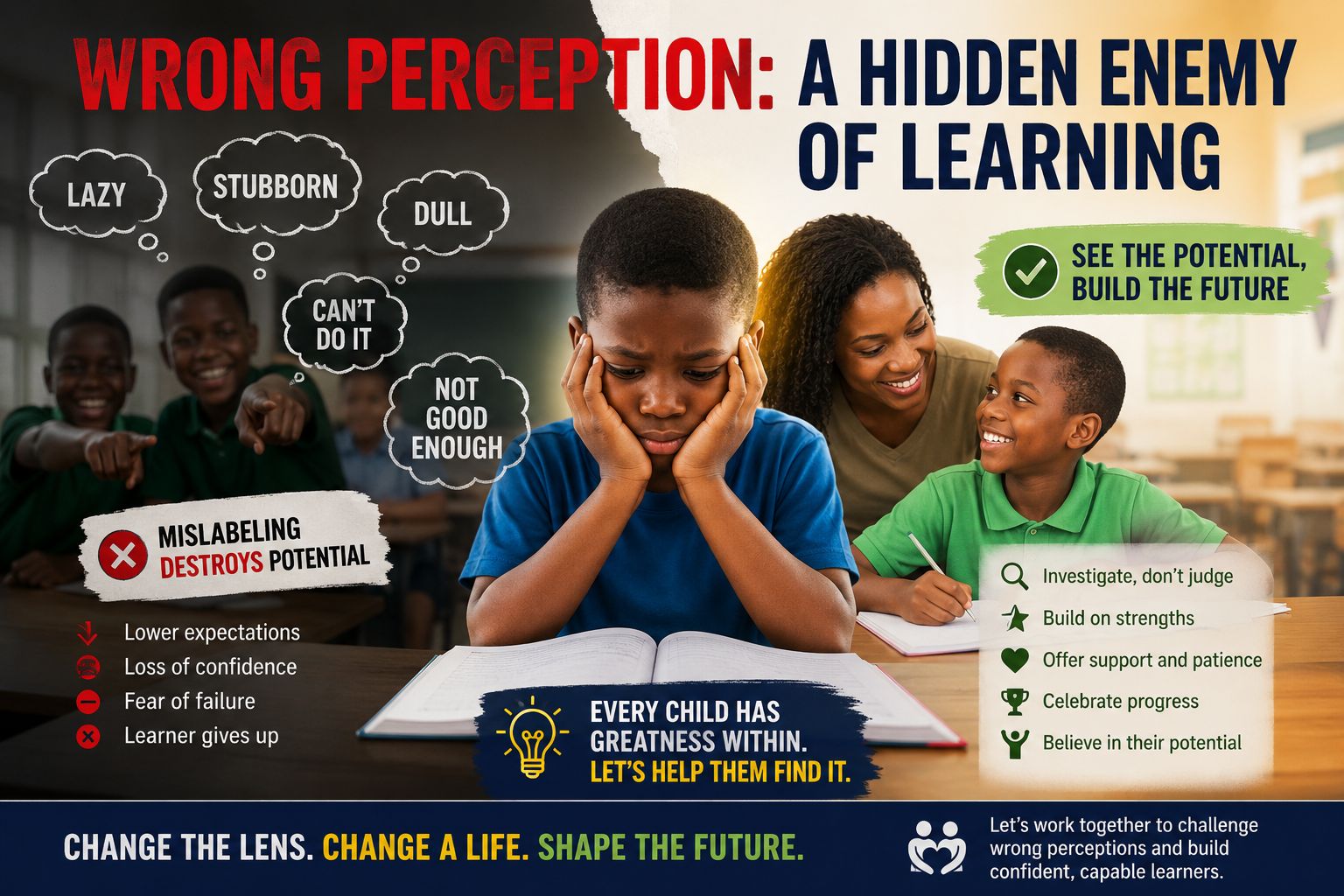
Have you ever heard a child described as “lazy,” “stubborn,” or “not intelligent enough” simply because they struggle to keep up in class?
Sadly, such labels are more common than many people realize, and they often create a problem far bigger than the original learning challenge. One of the most damaging obstacles to education today is not a lack of intelligence or ability—it is wrong perception.
Across homes and classrooms, many children face judgments that fail to reflect the real reasons behind their academic struggles. What appears to be poor performance may actually be linked to attention difficulties, emotional stress, ineffective teaching methods, learning differences, or simply a lack of the support they need to thrive.
Unfortunately, when adults rush to conclusions, the consequences can be severe. Expectations are lowered, patience begins to fade, and children are constantly compared with others who may have different strengths and circumstances.
Over time, these repeated messages become internalized. A child who is repeatedly told, “You can’t do it” may eventually begin to believe it. Confidence weakens, motivation drops, and the learner starts to see failure as an unavoidable reality rather than a temporary challenge.
This is why educators and child development experts continue to emphasize the importance of changing our perspective. Instead of asking, “What’s wrong with this child?” adults should ask, “What is this child experiencing, and how can we help?”
Every learner possesses unique strengths. Some excel academically, while others shine in sports, music, creativity, leadership, craftsmanship, or problem-solving. A strength-based approach allows teachers and parents to identify and nurture these abilities while providing support in areas where improvement is needed.
The truth is simple; children should not be defined by their struggles. A temporary difficulty should never become a permanent label.
As education stakeholders continue to advocate for more inclusive and supportive learning environments, one message remains clear: patience, empathy, understanding, and belief in a child’s potential can help dismantle one of the most silent yet destructive enemies of learning—wrong perception.
Join the Conversation
- Have you ever witnessed a child being wrongly labeled because of academic struggles or behavior?
- What practical steps can parents, teachers, and schools take to replace negative assumptions with understanding and support?
- Share your experiences, opinions, and suggestions in the comments section below. Your insight may encourage someone to see a learner differently and help unlock a child’s hidden potential.
About The Author