Emotional Insecurity: The Silent Destroyer of Learning
By Tolulope Olanrewaju | Edutorial Desk
Otan Ayegbaju, Osun State, Nigeria – July 6, 2026
Imagine asking a child a simple question in class, only to watch them lower their head in fear, not because they do not know the answer, but because they are afraid of making a mistake. Sadly, this is the everyday reality for many children.
One of the greatest barriers to quality education is not poor intelligence, lack of textbooks, or inadequate facilities. It is emotional insecurity—a hidden challenge that quietly destroys children’s confidence and willingness to learn.
Across many homes and classrooms in Nigeria, some children are raised in environments where shouting, insults, harsh comparisons, ridicule, and constant threats have become normal methods of correction. While these approaches may produce temporary obedience, education experts argue that they often leave lasting emotional scars.
As the saying goes, “A fearful child cannot learn freely.” Learning thrives where curiosity is encouraged, not where fear dominates.
Children who constantly worry about being embarrassed or punished begin to associate learning with anxiety instead of discovery. Rather than asking questions or attempting difficult tasks, they choose silence to avoid criticism.
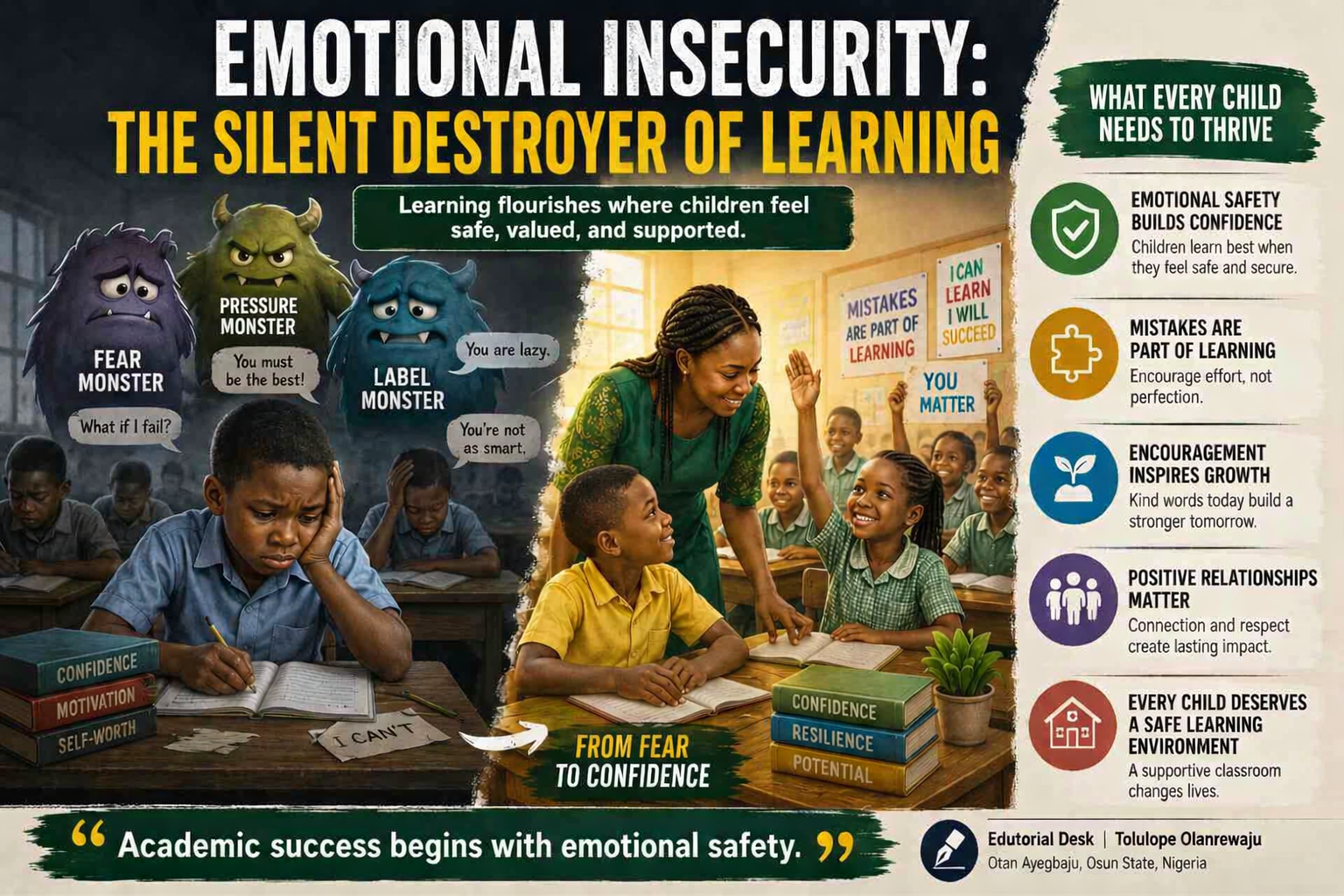
Education analysts have identified what can be described as three silent “monsters” that gradually weaken a learner’s confidence:
- The Fear Monster – the fear of making mistakes or being punished.
- The Pressure Monster – unrealistic expectations that create overwhelming stress.
- The Label Monster – harmful words such as “lazy,” “dull,” “stubborn,” or “failure” that children begin to believe about themselves.
These emotional burdens often appear as stubbornness, distraction, aggression, lack of concentration, or withdrawal. Unfortunately, such behaviors are frequently misunderstood as signs of laziness or lack of seriousness when, in reality, they may be cries for emotional support.
As one education advocate rightly noted, “Children learn best where they feel safe enough to fail, ask questions, and try again.”
Creating emotionally safe learning spaces does not mean abandoning discipline. Instead, it means correcting children in ways that preserve their dignity while helping them improve. Encouragement, patience, active listening, and positive reinforcement can build resilience far more effectively than fear.
Teachers, parents, and school administrators all have important roles to play. When children know they are valued regardless of occasional mistakes, they become more confident, creative, and willing to participate in learning.
Academic excellence should never come at the expense of emotional well-being. After all, education is not only about producing high scores but also about nurturing confident, emotionally healthy individuals who are prepared for life.
Join the Conversation
- Do you believe emotional safety affects a child’s academic performance?
- What practical steps have you seen teachers or parents take to build emotionally safe learning environments?
- Share your experiences and suggestions in the comments. Your insight could help shape a better future for many children.
About The Author