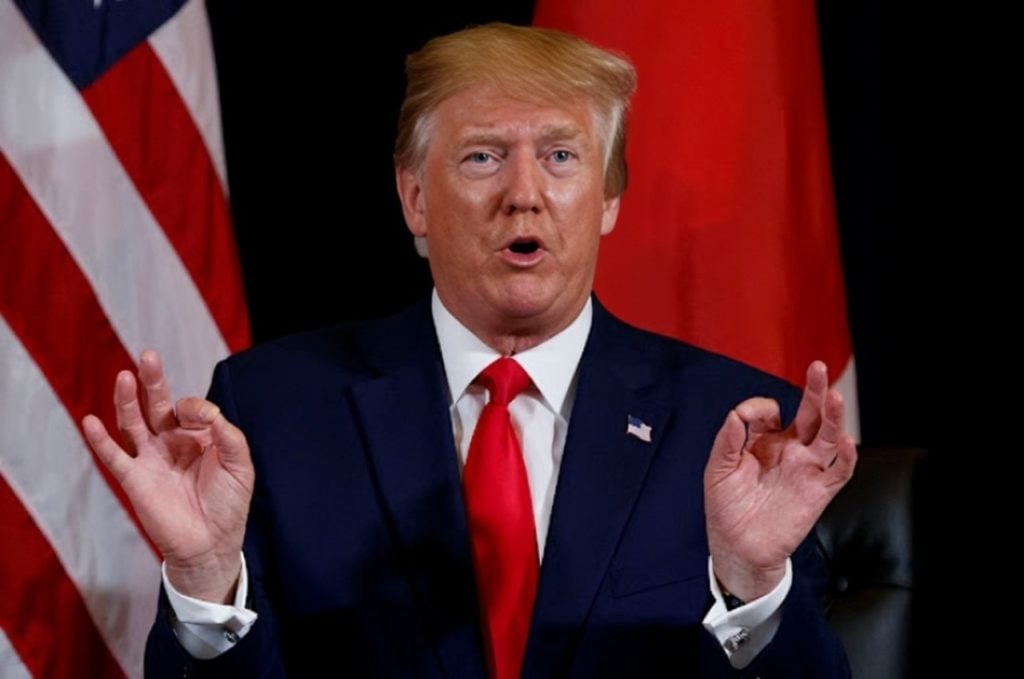
President Donald Trump has ordered the deployment of about 2,200 Marines and three naval warships to the Middle East as tensions continue to rise following ongoing military confrontations involving Iran, Israel and the United States.
According to two US officials, the deployment involves a Marine Expeditionary Unit consisting of roughly 2,200 Marines aboard three amphibious ships of the United States Navy.
The unit being deployed is the 31st Marine Expeditionary Unit, which is normally stationed in Japan and operates within the United States Indo-Pacific Command region. However, the unit has now been directed to move toward the Middle East as part of ongoing military adjustments in response to the escalating situation in the region.
Officials clarified that the movement of the Marine unit does not necessarily indicate preparations for a ground invasion or direct combat operations inside Iran. Instead, the deployment is intended to provide US military commanders with additional operational options should the situation deteriorate further.
The Marine Expeditionary Unit is designed to function as a rapid-response force capable of handling a wide range of military missions, including crisis response, evacuation operations and combat support. Its presence provides the United States with flexible capabilities that can support operations on land, at sea and in the air.
The unit also brings advanced aviation support, including F-35 Lightning II fighter jets as well as Bell Boeing MV-22 Osprey aircraft, which can operate both as helicopters and fixed-wing planes. These aircraft are capable of rapidly transporting troops and supporting surveillance or combat missions when required.
The deployment comes as hostilities involving Iran and Israel continue to intensify, with missile and drone exchanges reported across several locations in the Middle East. United States defence officials have not disclosed how long the Marine unit will remain in the region or whether additional forces will be deployed in the coming days. Military analysts say the move is aimed primarily at strengthening the US military posture in the region while giving commanders greater flexibility in responding to developments on the ground.
About The Author