
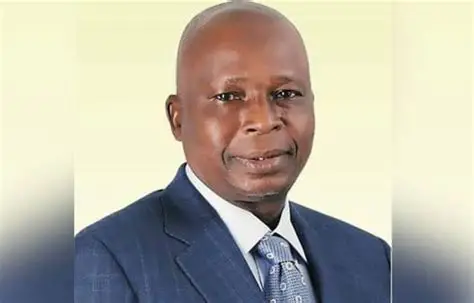
The Attorney General of the Federation has called on the Federal High Court in Abuja to order the Independent National Electoral Commission (INEC) to deregister five political parties. He argues that these parties’ continued recognition violates constitutional standards and undermines Nigeria’s electoral integrity.
In court documents, the Attorney General contends that unless the court intervenes, INEC will keep breaching its constitutional duty by allowing parties that don’t meet the necessary requirements to remain registered. He emphasizes that the right to form a political party is not unlimited and must adhere to constitutional rules, stressing that it would serve justice for the court to grant the reliefs requested by the plaintiffs.
The case, filed under suit number FHC/ABJ/CS/2637/2026 in the Federal High Court’s Abuja division, lists the Incorporated Trustees of the National Forum of Former Legislators as the plaintiffs. The case targets INEC as the first defendant and includes the Attorney General as the second defendant, alongside five political parties: the African Democratic Congress (ADC), Action Alliance (AA), Action Peoples Party (APP), Accord (A), and Zenith Labour Party (ZLP).
At the heart of the dispute is whether INEC has a constitutional duty to remove parties that fail to meet the electoral performance thresholds outlined in Section 225A of the 1999 Constitution (as amended) and the Electoral Act of 2022. The plaintiffs argue that these parties have not met the benchmarks, which require them to win at least 25% of votes in a state during a presidential election or secure at least one elected seat at any level of government. Despite their poor performance in the 2023 elections and subsequent by-elections, INEC continues to recognize them, which the plaintiffs believe is unlawful.
In the supporting affidavit, the forum’s national coordinator, Igbokwe Raphael Nnanna, asserts that allowing these parties to remain registered is unconstitutional and violates the legal framework governing electoral conduct.
The plaintiffs seek a court order compelling INEC to deregister these parties before the 2027 elections, and they also want the court to prevent these parties from participating in future elections or engaging in political activities unless they meet constitutional standards. Furthermore, the plaintiffs argue that the Constitution mandates INEC to take action without discretion, using the word “shall” to emphasize the requirement for enforcement of electoral thresholds.
The Attorney General, although a defendant, has filed a notice supporting the plaintiffs’ case, recognizing his duty to ensure constitutional compliance. He maintains that this case is critical to uphold electoral laws and public confidence in the political system. The Attorney General also asserts that political parties’ non-compliance with constitutional requirements contributes to issues like ballot congestion and unnecessary election costs.
The plaintiffs, made up of former legislators, argue they have standing in this case due to their involvement in crafting Nigeria’s electoral laws. The Attorney General’s legal team, headed by Prof. J.O. Olatoke, SAN, supports the legal action, which could have significant consequences for Nigeria’s political system if the court rules in favor of deregistering the affected parties.
About The Author