
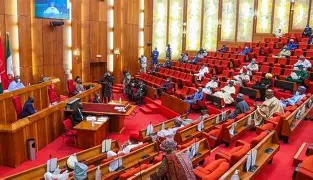
National Assembly
As Nigeria’s 10th National Assembly enters its final year in office, a new assessment has raised concerns about the legislature’s ability to deliver on the promises it made to Nigerians at the beginning of its tenure. The report, published by civic-tech organisation AdvoKC Foundation through its Promise Tracker NG platform, indicates that a significant number of legislative commitments remain unfulfilled, casting a shadow over the Assembly’s performance record.
According to the assessment, lawmakers have failed to deliver on 68 out of 92 promises tracked since the inauguration of the 10th National Assembly. The findings suggest that while some progress has been made in key sectors, the majority of commitments made to citizens have either been abandoned, delayed, or only partially implemented.
The House of Representatives recorded a fulfilment score of 26.8 per cent. Out of the 56 commitments monitored, only 13 were successfully delivered, four were classified as compromised, while 39 were deemed broken. The Senate performed slightly better, achieving a fulfilment score of 44.11 per cent. Of its tracked commitments, nine were fulfilled, 12 were compromised, and 13 remained unfulfilled.
A closer look at sectoral performance reveals mixed results. In the House of Representatives, healthcare emerged as the strongest-performing sector with a score of 67 per cent, while justice and security followed with 57 per cent. However, the House recorded no progress in the economy and jobs category, while governance and political reform received a score of just six per cent. Key promises relating to electoral reforms and constitutional amendments remain largely unresolved.
The Senate showed stronger performance in some areas, particularly education, where it achieved a score of 66.7 per cent. Economic development and job-related commitments also recorded a relatively better score of 57.1 per cent. Nevertheless, major reforms concerning constitutional amendments, youth inclusion in governance, and local government autonomy have continued to face delays.
Reacting to the findings, AdvoKC Foundation’s Project Director, Habib Sheidu, stressed that legislative agendas should not be treated as mere political declarations but as binding commitments made to the Nigerian people. He described the promises as solemn public covenants that lawmakers are expected to honour throughout their tenure.
Sheidu noted that the report should serve as an important reminder rather than a condemnation of the National Assembly. He urged lawmakers to take advantage of the remaining year of the legislative cycle to accelerate pending reforms and improve their overall performance record.
According to him, the final year presents an opportunity for legislators to rescue their legacies by fast-tracking stalled constitutional amendments and implementing the reforms they promised during their inauguration. He maintained that Nigerians deserve a legislature that remains committed to delivering meaningful governance outcomes rather than allowing critical reforms to remain trapped in prolonged legislative processes.
The AdvoKC Foundation explained that its Legislative Agenda Meter was created to give citizens a transparent, data-driven tool for monitoring legislative performance and strengthening accountability. The organisation said it would continue updating the platform while encouraging citizens, civil society organisations, and media practitioners to actively engage with the findings and hold elected representatives accountable for their commitments.
The latest assessment highlights the growing demand for greater accountability in governance as Nigerians increasingly seek measurable results from elected officials. With just one year left before the end of the 10th National Assembly, attention is now turning to whether lawmakers can close the gap between promises made and promises delivered.
About The Author