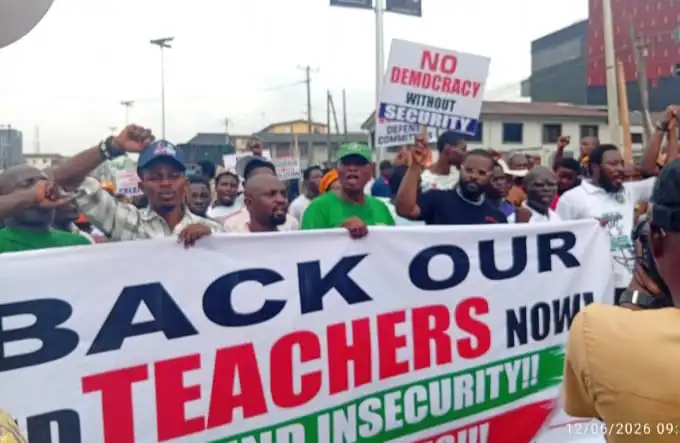
Democracy Day Protest in Lagos against Insecurity
Nigeria’s Democracy Day celebrations took on a dramatic turn in Lagos as a protest led by prominent human rights lawyer Femi Falana drew attention to growing concerns over insecurity and economic hardship, while a counter-rally by supporters of President Bola Tinubu created a tense atmosphere under the Ikeja Bridge.
The demonstration formed part of a nationwide mobilisation by civil society organisations, labour unions, youth groups, and faith-based movements that designated June 12 as a day of mass action. The coalition said the protest was intended to spotlight the worsening security situation across the country and the economic challenges facing millions of Nigerians.
Leading the protest alongside activist Hassan “Soweto” Taiwo, labour representatives, and other civic leaders, Falana argued that insecurity continues to threaten lives and livelihoods in many parts of the country. He pointed to recurring abductions in states such as Oyo, Borno, Zamfara, and Kebbi, noting that the crisis has disrupted farming activities, education, transportation, and business operations. According to him, Nigerians deserve a government that places greater emphasis on protecting lives and property while safeguarding citizens’ democratic rights.
The protest coincided with official Democracy Day celebrations across the country, including President Bola Ahmed Tinubu’s national broadcast commemorating 27 years of uninterrupted civilian rule in Nigeria. In his address, the President acknowledged the security challenges facing the nation and referenced recent incidents of abduction in Oyo and Borno states. He defended his administration’s declaration of a security emergency and highlighted efforts to strengthen law enforcement through the recruitment of more than 50,000 police officers and increased investment in defence and security operations.
President Tinubu also used the occasion to defend key economic reforms introduced by his administration, including the removal of fuel subsidies and the liberalisation of the foreign exchange market. According to the President, these measures have improved government revenues, strengthened public finances, and enhanced investor confidence. However, critics maintain that the reforms have contributed to rising living costs, inflationary pressures, and increased hardship for ordinary citizens.
As both events unfolded simultaneously, differing views about governance and democracy became increasingly visible. While Falana and his supporters called for urgent reforms and stronger government action to address insecurity and economic difficulties, another group identified as “Team Nigeria” gathered at the same venue to express support for the Tinubu administration. The presence of both groups transformed the area into a symbolic battleground of competing political narratives.
Tensions rose as both camps deployed loudspeakers and music systems, each attempting to amplify its message. Security personnel were promptly deployed to prevent the situation from escalating. Police officers led by Superintendent Akinwumi Oke monitored the gathering and worked to maintain order as supporters from both sides exchanged chants and slogans.
The atmosphere became even more charged with the arrival of Falana, accompanied by his wife, Funmi Falana, and his son, musician and activist Folarin Falana, popularly known as Falz. Their presence energized demonstrators and reinforced calls for greater government responsiveness to citizens’ concerns.
Addressing the crowd, Falana argued that Nigeria’s democratic journey remains incomplete, insisting that the rights of citizens to assemble peacefully and express their grievances must be protected. He urged authorities to ensure that lawful demonstrations are not disrupted, emphasizing the importance of civic participation in a democratic society.
As of the time of reporting, no injuries or arrests had been confirmed, and security personnel remained on the ground to prevent further escalation. Nevertheless, the events highlighted the deep divisions that continue to shape public discourse in Nigeria, particularly on issues relating to governance, security, and economic management.
The developments also served as a reminder of the significance of June 12 in Nigeria’s democratic history. The date commemorates the annulled 1993 presidential election widely believed to have been won by the late Chief Moshood Kashimawo Olawale Abiola, a landmark event that remains a symbol of the nation’s struggle for democratic governance.
More than three decades later, Democracy Day continues to provide a platform for reflection on Nigeria’s progress and challenges. While the country has sustained civilian rule for nearly three decades, the events in Lagos demonstrate that many citizens are still calling for reforms that will deliver greater security, economic stability, and improved living conditions for all.
About The Author