Iran launched missile attacks on Israel and several Gulf countries early Monday, shortly after naming Mojtaba Khamenei as the new Supreme Leader following the death of his father, Ayatollah Ali Khamenei.
The escalation comes nine days after joint US-Israeli strikes reportedly killed the former Iranian leader, a development that pushed the Middle East into a broader regional conflict.
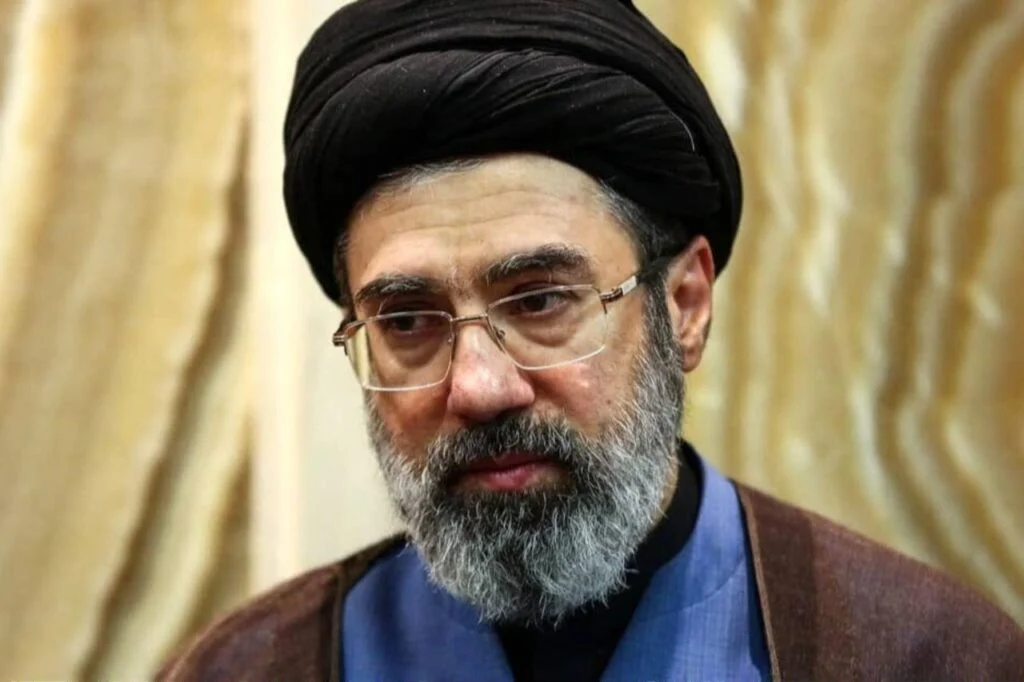
According to Iranian state television, the Assembly of Experts, a powerful 88-member clerical body, unanimously selected the 56-year-old Mojtaba Khamenei as the country’s third supreme leader since the 1979 Islamic Revolution.
The announcement was delivered during a solemn broadcast in which the state presenter read the Assembly’s statement alongside a photograph of the new leader.
The statement declared that Mojtaba Khamenei had been officially appointed to lead the Islamic Republic and that the decision was reached quickly despite what it described as aggression by the United States and Israel.
Renewed Military Escalation
Following the announcement, Israel launched fresh air strikes targeting infrastructure in central Iran, further intensifying the conflict.
Iran’s retaliatory attacks extended beyond Israel, with several Gulf countries also reporting incoming missiles and drones.
Saudi Arabia said it intercepted drones headed toward an oil facility in the country’s eastern region.
Authorities in the United Arab Emirates and Kuwait also confirmed missile incidents, while Bahrain reported that warning sirens were activated across parts of the country.
Iranian state media also broadcast footage of a projectile reportedly fired toward Israel carrying the slogan “At Your Command, Sayyid Mojtaba,” referencing the newly appointed leader.
Global Market Reaction
The expanding conflict triggered turbulence in global financial markets.
Oil prices surged dramatically, with crude rising above $100 per barrel for the first time since Russia’s invasion of Ukraine, amid fears of supply disruptions in the oil-rich Gulf region.
Stock markets across Asia also recorded sharp declines as investors reacted to the growing instability in the Middle East.
Despite the price surge, US President Donald Trump downplayed the impact, describing the spike in oil prices as a “small price to pay” for eliminating what he called the threat posed by Iran’s nuclear ambitions.
US and Israeli Warnings
Before the leadership announcement, Trump had publicly criticised Mojtaba Khamenei, calling him a “lightweight” and suggesting Washington should influence the selection of Iran’s next leader.
Meanwhile, Israel had warned that any successor to the late Ayatollah Ali Khamenei could become a military target if hostilities continued.
Support From Iran’s Military
Iran’s powerful Islamic Revolutionary Guard Corps (IRGC) quickly pledged loyalty to the new leader.
In a statement, the Guards said they were ready to demonstrate “complete obedience and self-sacrifice” in carrying out the directives of Mojtaba Khamenei.
Foreign Minister Abbas Araghchi also expressed support for the appointment, stating that the new leadership would help safeguard Iran’s sovereignty and territorial integrity.
Fighting Expands to Lebanon
The regional conflict has also spread to Lebanon, where the Iran-backed militant group Hezbollah said it was fighting Israeli forces after helicopters reportedly landed troops in eastern Lebanon near the Syrian border.
Hezbollah fighters said they engaged Israeli forces as clashes continued in the area.
Lebanon had entered the conflict earlier after Hezbollah launched attacks on Israel following the killing of Ali Khamenei.
Lebanese officials say Israeli air strikes have killed hundreds of people since the fighting began.
Rising Casualties
Authorities across the region reported mounting casualties as the war intensifies.
Lebanon’s health ministry said at least 394 people have died in Israeli strikes since the conflict began, including dozens of children and women.
In Bahrain, officials reported that an Iranian drone strike wounded 32 people, including a teenage girl and a two-month-old baby.
Saudi Arabia also confirmed casualties after a projectile struck Al-Kharj province, killing two people and injuring several others.
Iranian officials claim that more than 1,200 civilians have been killed and about 10,000 injured in the conflict, although these figures have not been independently verified.
Meanwhile, Iranian missile attacks have reportedly killed 10 people in Israel, according to Israeli authorities.
About The Author