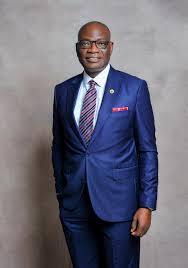
Former VC, University of Lagos, Prof Oluwatoyin Temitayo Ogundipe
President Bola Tinubu has appointed former Vice-Chancellor of the University of Lagos (UNILAG), Professor Oluwatoyin Temitayo Ogundipe, as the new Chairman of the Governing Board of the National Universities Commission (NUC), a move expected to strengthen leadership and reforms within Nigeria’s higher education sector.
The appointment was announced in a statement released on Monday by presidential spokesman Bayo Onanuga, who confirmed that Professor Ogundipe would succeed Emeritus Professor Olufemi Raphael Aina. Aina resigned from the position less than a year after his appointment. He had been named chairman in July 2025, while the governing board was officially inaugurated in November of the same year.
Professor Ogundipe is widely regarded as one of Nigeria’s most accomplished academics and university administrators. He served as Vice-Chancellor of UNILAG from 2017 to 2022 and currently holds the position of Pro-Chancellor at Redeemer’s University, Ede, Osun State.
With decades of experience in teaching, research, and educational leadership, Ogundipe is expected to bring valuable expertise to the commission at a time when Nigeria’s university system faces numerous challenges.
A respected botanist, Ogundipe holds a PhD in Botany from Obafemi Awolowo University and an MBA from the University of Lagos. His research interests include molecular plant taxonomy, ethnobotany, ecological conservation, biosystematics, cytogenetics, and forensic botany.
Beyond academia, he has held several notable leadership positions, including President of the Botanical Society of Nigeria and Chairman of the Lagos State Science, Research and Innovation Council. He is also a fellow of prestigious professional bodies such as the Nigerian Academy of Science, the Linnean Society of London, and the Royal Society of Biology.
According to the presidency, the new chairman is expected to provide strategic leadership in areas such as university regulation, quality assurance, academic stability, funding, and institutional development.
The statement noted that “Professor Ogundipe will bring his wealth of experience to bear in advancing reforms aimed at improving access, quality, and integrity in our university system.”
Education stakeholders have described the appointment as timely, especially as Nigerian universities continue to grapple with challenges including inadequate funding, infrastructure deficits, industrial disputes, and concerns over global competitiveness.
Analysts believe Ogundipe’s leadership could play a significant role in shaping policies that will improve standards and reposition Nigerian universities for greater relevance in an increasingly competitive global academic environment.
As he assumes his new responsibilities, expectations remain high that his experience and expertise will help drive meaningful reforms across the nation’s higher education landscape.
About The Author