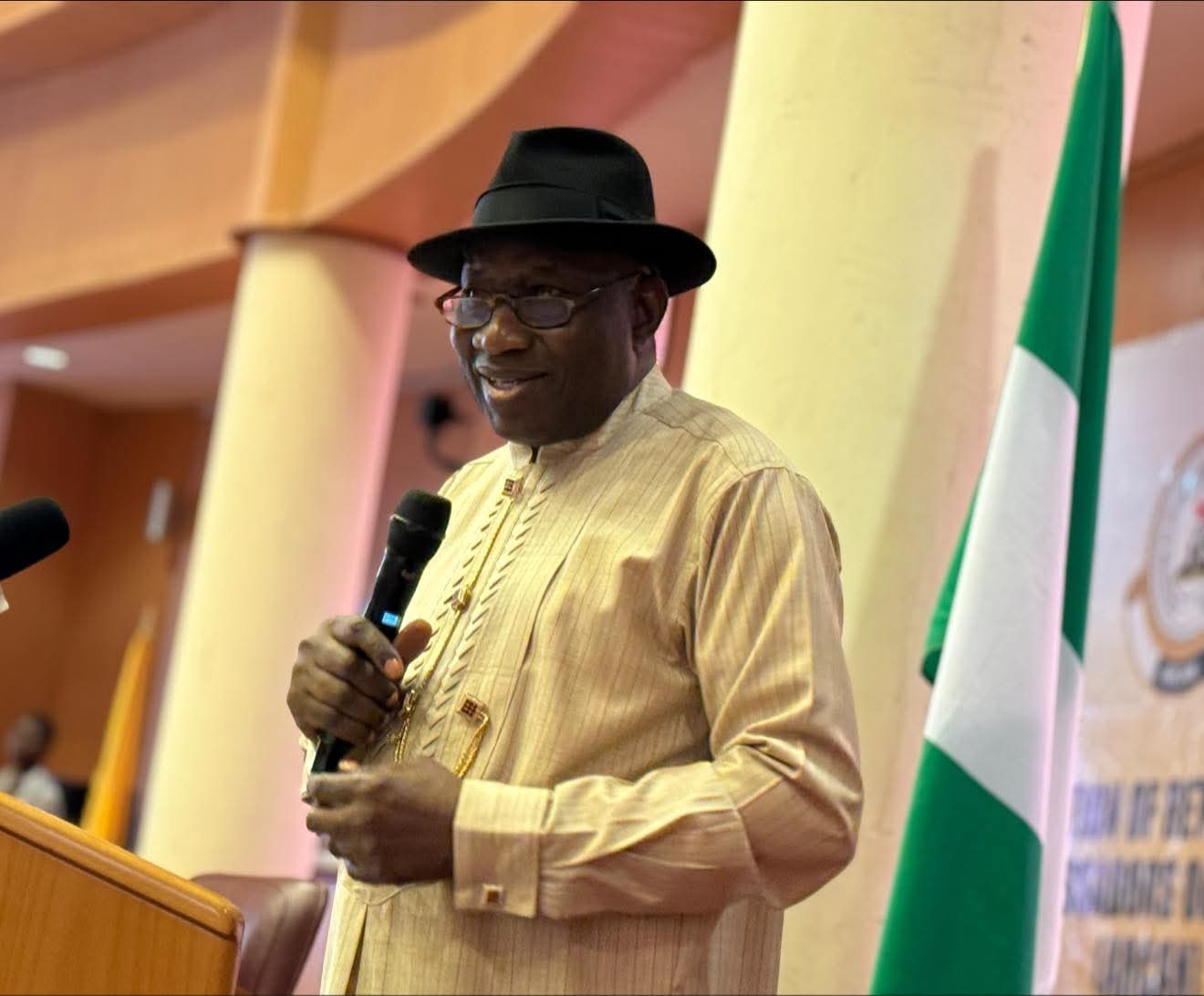
Goodluck Ebele Jonathan
The Federal High Court in Abuja has ruled that former President Goodluck Jonathan is eligible to contest the 2027 presidential election, ending months of legal uncertainty surrounding his possible return to active politics.
The judgment was delivered by Justice Peter Lifu, who dismissed a suit filed by lawyer Johnmary Jideobi challenging Jonathan’s eligibility to participate in the election.
In his ruling, Justice Lifu held that the plaintiff lacked the legal standing to institute the case, noting that he failed to demonstrate any personal injury or direct loss resulting from Jonathan’s intention to contest. The judge further described the suit as frivolous and an abuse of court process.
The court also imposed financial penalties on the plaintiff, ordering Jideobi to pay ₦20 million in damages. An additional ₦1 million was awarded in favour of the Attorney-General of the Federation.
Justice Lifu explained that previous judgments by the Federal High Court in Yenagoa and the Court of Appeal had already affirmed Jonathan’s eligibility to seek the presidency again. According to the judge, the appellate court’s ruling remains binding on lower courts.
The judgment is expected to have a major impact on Nigeria’s political landscape ahead of the 2027 general elections, as Jonathan’s possible return could reshape alliances across major political parties.
Political analysts believe the ruling may also influence investor confidence and business expectations, as stakeholders closely monitor developments that could affect economic policies, governance, and national stability.
Jonathan, who served as Nigeria’s president between 2010 and 2015, remains one of the country’s most influential political figures. His administration recorded significant achievements in some sectors while also facing criticism on issues of governance and security.
With the legal hurdle now cleared, attention is expected to shift toward whether the former president will officially declare his intention to contest and how his potential candidacy may affect the strategies of other political contenders.
Observers say the ruling also reinforces the judiciary’s role in protecting democratic processes and discouraging unnecessary litigation. The decision highlights the courts’ commitment to ensuring that legal actions are based on genuine grievances rather than speculative claims.
As preparations for the 2027 elections gradually intensify, Nigerians, political stakeholders, and the business community are expected to closely watch developments surrounding Jonathan’s next political move.
About The Author