
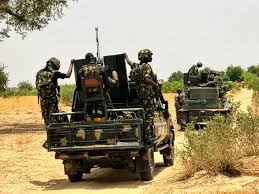
Nigerian Army
The Nigerian Army has recorded another breakthrough in its ongoing counter-insurgency efforts with the arrest of a suspected informant linked to the Islamic State West Africa Province (ISWAP) in Borno State.
The suspect was apprehended by troops of Operation Hadin Kai during a routine security patrol aimed at strengthening defenses and preventing terrorist infiltration in communities across the North-East.
According to reports, the suspect, identified as Umar Isah, a 37-year-old resident of Dawu village, was arrested on June 20 by personnel of the 154 Task Force Battalion. The operation formed part of the military’s intelligence-driven strategy designed to dismantle terrorist networks and disrupt their activities within the region.
Security analyst Zagazola Makama, who monitors counter-insurgency operations in the Lake Chad region, disclosed details of the arrest in a post shared on X.
Although no incriminating items were reportedly found on the suspect at the time of his arrest, military authorities have confirmed that he will be transferred to the Military Intelligence Brigade (MIB) of Sector 2 for further investigation.
The development highlights the increasing emphasis being placed on intelligence gathering and surveillance in the fight against terrorism. Security experts have long argued that informants and collaborators often play critical roles in helping insurgent groups obtain information, logistics, and access to vulnerable communities.
Explaining the significance of the operation, Makama stated that the arrest forms part of broader efforts to weaken terrorist networks operating in the North-East.
“The arrest is part of ongoing intelligence-driven operations by Operation Hadin Kai to disrupt terrorist networks, identify collaborators and deny insurgent groups access to information and logistical support within communities across the North-East,” he said.
The Nigerian Army has consistently maintained that community cooperation remains essential in combating insurgency and enhancing security across affected areas.
Military officials believe proactive patrols, intelligence sharing, and collaboration with local residents are critical to preventing attacks and identifying individuals suspected of supporting terrorist activities.
As security operations continue across the region, authorities have reassured residents of their commitment to protecting lives and property while sustaining efforts to restore lasting peace in communities affected by insurgency.
About The Author